How To Read the HKSR
A practical walkthrough of every tool inside the Hong Kong Speed Report — from pace forecasting and speed ratings to jockey data and horse angles. Start here, then build your own approach.
Save it, print it, keep it open beside your card.
It All Starts With Pace
One of the major selling points for the HKSR is our multiple ways we feature pace analysis. On each race tab, we start with the HKSR Pace Forecaster — using our "EP" (Early Pace) averages — to give you an idea of how the first couple of sections will play out and who we expect to be on the lead.
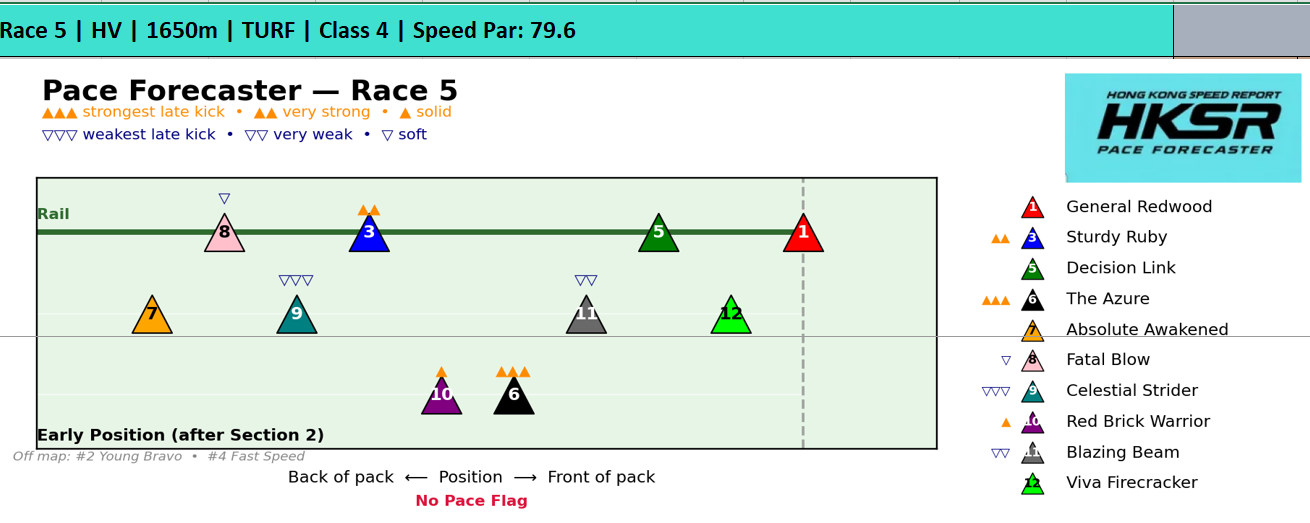
Many times the forecaster will read "No Pace Flag," which means we expect the race to play out at a standard — or sometimes slower than usual — pace. Other times, we'll flag races where we expect a HOT/FAST pace, signaling that horses with strong off-pace tendencies could benefit.
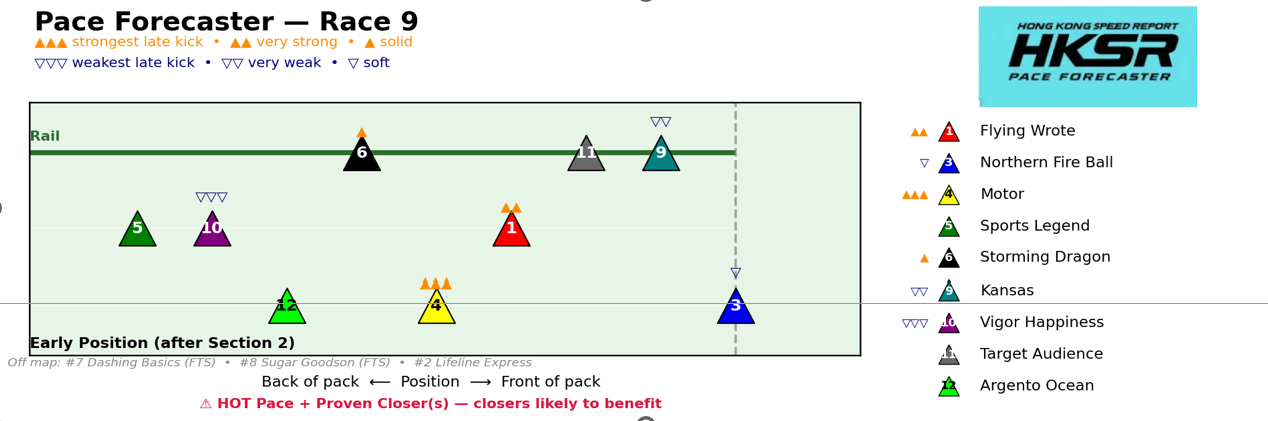
A hot pace was set by #3 Northern Fire Ball, who went very quick early and set the race up perfectly for three horses just behind — #11 Target Audience, #4 Motor, and #1 Flying Wrote — who made up the top three finishers. Flying Wrote and Motor both appeared in the HKSR's top three strongest Late Kick rankings for the race.
The Pace Forecaster also flags the horses with the three strongest and weakest "Late Kick" figures — a horse's relative pace in the final section of the race. This is where pace type really matters: the shorter the race, the more early pace dominates; the longer the race, the more important late kick becomes.
We also use the HKSR Summary Tab to show the most common run style for every horse in a given race at a glance.
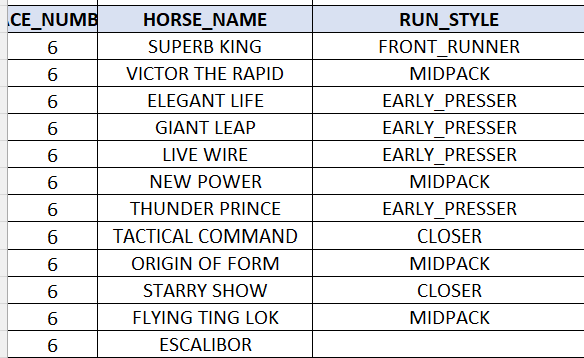
Having a clear opinion about the pace of a race is critical to forming wagers — especially when considering Omni/Exacta/Quinella combinations.
Speed Is King
Sometimes, it's best not to overcomplicate things: horses that run faster than other horses tend to win races. HKSR's custom speed ratings factor in numerous variables — class, going, distance — to give you an edge over the general public.
On the Summary Tab, horses for each race are ordered highest to lowest by their average speed rating over their last three races.

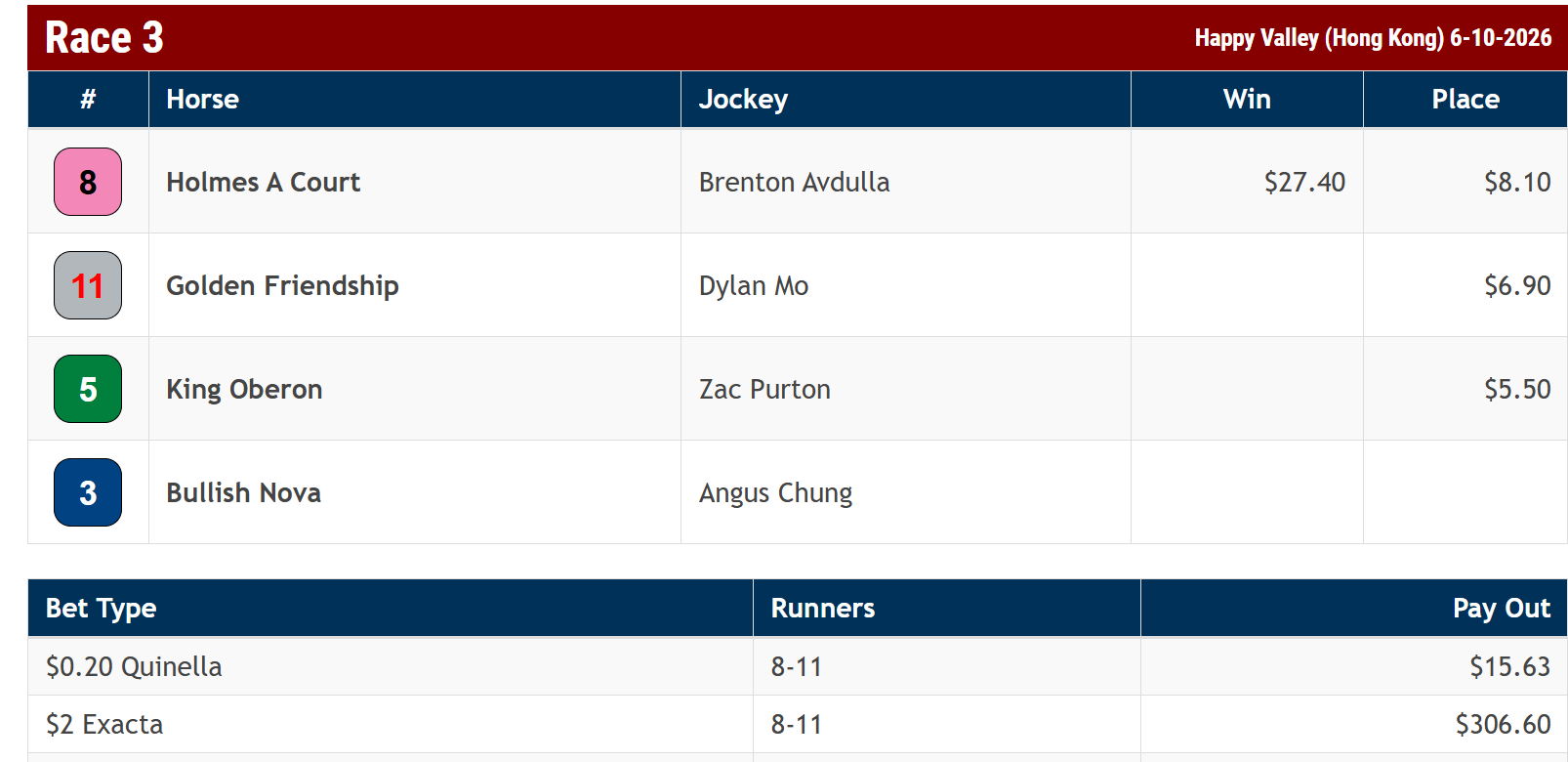
The second and third fastest horses by average speed rating ended up being the runner-up and winner — an Exacta that paid 150-to-1.
Pay Attention To Who's Trending
The HKSR Trendlines® Report gives you, in one simple image, a snapshot of every horse's last six races plotted on a single graph. The higher a horse plots, the better their combined speed and pace score. Trendlines® uses a statistical regression model to highlight which horses are trending upward — and which are trending downward.
We highlight up to the top three highest and lowest trending horses in every race. They will often surface horses you may not have otherwise considered.
Horses appearing in the Top 3 Improving Trends box won 7 out of 9 races on the card, including all three in Race 3 — making up a Trifecta that paid 1,100-to-1.
Jockey Data
Use the JockeyData tab to get a quick read on how each jockey has been performing over the current meet and over the last six months. Course-split win rates can reveal specialists you'd otherwise miss.
Here's a snapshot of what you can gather in a single glance for June 2026:
| Jockey | Sha Tin Win% | Happy Valley Win% | Note |
|---|---|---|---|
| Matthew Chadwick | ~0.7% | — | 1 for 150 at Sha Tin |
| Angus Chung | 3.4% | 13.4% | Strong HV specialist |
| Joao Moreira | 11.4% | 22.6% | 53 starts; HV dominance |
| James Orman | 9.1% | 5.7% | Sha Tin specialist |
These splits can dramatically change how you assess a contender. A horse with a mediocre overall jockey record can look very different when you filter for the right course.
Analyze the Data
For a given race, there's a wealth of information in both the inline Past Performances and the career record tables. Here's what's available and where to find it.
Right side of each race tab — Career Record Table: a horse's win and place record for relevant conditions in today's race: distance, class, year-to-date, with today's jockey, carrying weight, and more.
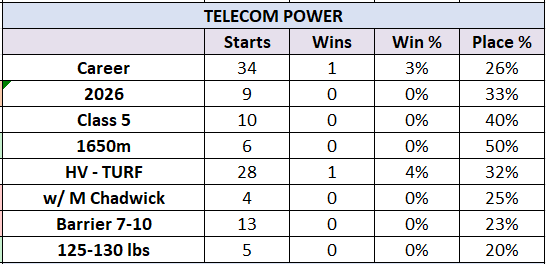
Left and center of the race tab — Blue Horse Row: each horse's program number, barrier draw, Early and Late Pace ratings, Speed Rating trend, and most common run style.

Underneath each horse's blue row, you'll find Horse Angles — win percentages and ROI rates for past horses who met the same criteria.
Motor's last few races triggered the "Hot Horse" and "JockeyTrainer" angle combo — a horse who won his last race, placed in his last three, and teams with a jockey where the trainer has a 10%+ win rate. Motor finished third, a nose out of second.

Green highlighted rows show trainer data — win rates and ROI for relevant conditions in today's race, plus their success rate with today's jockey. Trainer angles include:

Past Performances: up to a horse's last six races, including race date, track, surface, jockey, barrier draw, finishing position, speed rating, pace rating, and individual pace metrics for early, middle, and late sections.
Additional helper columns include:

Don't Overthink It
There's a lot of data available within the Hong Kong Speed Report. It can be easy to get lost in it and overthink what you should be doing. Like anything else in horse handicapping, it's best to use the data in the way that you find most valuable.
Some players will build their entire approach around pace flow and run style matchups. Others will lean on Trendlines® to find improving horses at value prices. Others will stick to top speed figures and let the numbers lead. All of these are valid starting points.
The HKSR is designed to give you multiple angles of attack — the goal is to find the approach that fits your style, sharpen it with the data, and stay consistent.
If you have questions about any section of the report, or you want to talk through how to apply the data to a specific race, reach out at contact@hongkongspeed.com. We're here to help you get the most out of every card.